Project Objective
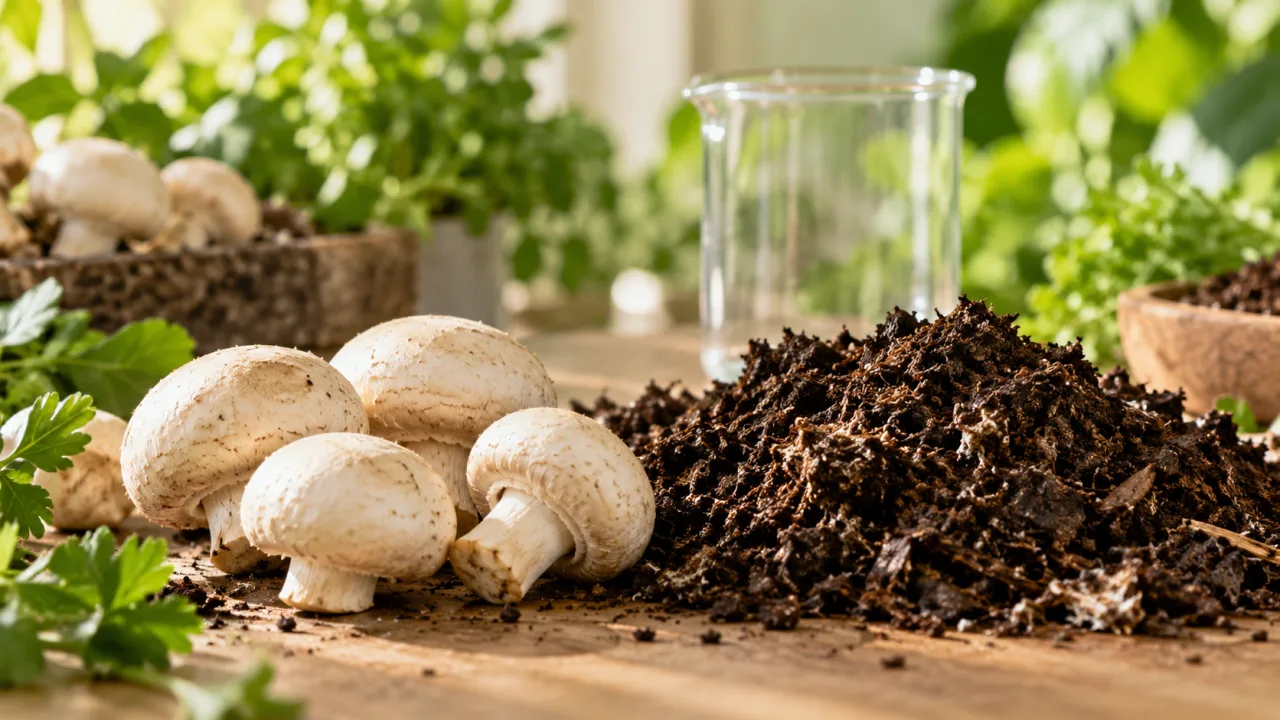
The aim was to turn compost left over from cultivated mushroom production into a value-added agricultural input. Work focused on a liquid organomineral fertilizer form that makes use of the organic matter, nutrients, enzymes, amino acids and humic-fulvic compounds it contains.
The liquid form was intended to be easier to apply through pressurized irrigation and other application equipment, and to be enriched with nutrients where needed.
Scientific Rationale
Spent mushroom compost is a raw material assessed for its organic matter, nitrogen, phosphorus, potassium and other plant nutrients, as well as its microbial content, mushroom mycelium and extracellular enzymes. The project set out to reduce the application difficulties of the solid form by liquefying the waste, and to put it back to use.
Project Scope
A multi-stage process was designed, covering size reduction of the organic raw material, dissolution and extraction in a reactor, mixing at a set time and temperature, enrichment with the required macro- and micronutrients, and filtration.
The scope also included analysis of the product's physical and chemical properties, such as pH, electrical conductivity, organic matter and macro- and micronutrient content.
Project Outcomes
The project developed a production approach for using mushroom compost as a raw material for liquid organomineral fertilizer. The target was a biodegradable product suitable for fertigation and various irrigation systems. Potential benefits include returning the waste to the economy, supporting domestic production, reducing dependence on imported inputs and contributing to the regional economy.